The Secret to Healthy Skin: Take Your Fish Oil!

The Secret to Healthy Skin: Take Your Fish Oil!

The Secret to Healthy Skin: Take Your Fish Oil!

THAT’S RIGHT, TAKE YOUR FISH OIL!

We all have heard about fish oil (AKA Omega-3 oils) for heart health, for improving our joints and for brain health. So it might surprise you to learn about some serious skin benefits too!

When it comes to healthy skin, most of us concentrate on what we are applying on the surface. But what you put in your body can be just as important as what you put on it. Taking Omega-3 fish oils can help with everything from acne and eczema to wrinkles!

A LITTLE BACKGROUND:

Fish oil contains 2 main types of Omega-3 fatty acids (though there are 8 total types): docosahexaenoic acid (DHA) and eicosapentaenoic acid (EPA). DHA works to keep the brain functioning at its best and is a structural component of your skin, a crucial element in maintaining healthy cell membranes. EPA specifically benefits your skin by acting as an antioxidant, anti-inflammatory and regulator for oil production.

LET’S BREAK DOWN SOME OF THE BENEFITS OF OMEGA-3S FOR YOUR SKIN.

HERE ARE 7 FABULOUS BENEFITS…

1) SKIN HYDRATION

Benefits of Fish oil on your skin

Omega-3 oils are amazing at skin hydration from the inside out. As you get older, your skin thins and holds less moisture resulting in dry, flaking skin. Omega-3 oils allow your skin cells to retain water more efficiently to keep your skin hydrated, pump and soft.

BENEFITS:

  • More youthful looking skin by reducing fine lines and wrinkles caused by dry skin and overuse of irritating products

  • Relief from eczema! Even kids with dry skin and eczema issues can benefit from Omega-3 oils

2) REDUCTION IN INFLAMMATION

REDUCTION IN INFLAMMATION

Omega-3 oils naturally exist in the membranes of immune cells and are important for your immune system. Inflamed skin can result in redness, itching and scale. Boosting your intake can reduce inflammation in your body and your skin!

BENEFITS:

  • Improvement in inflammatory issues like psoriasis, atopic dermatitis and eczema

  • Soothing skin that is inflamed from a dry or harsh environment (think everything from snow skiing to chlorinated swimming pools or even a day at the beach with the sun, salt water, and sand)

3) SMOOTHER SKIN

benefits of fish oil is smoother skin

Omega-3 oils prevent hyperkeratinization. What is this you ask? This is when skin cells stick together and clog your pores/hair follicles (FYI: your pores and hair follicles are the same thing!).

BENEFITS:

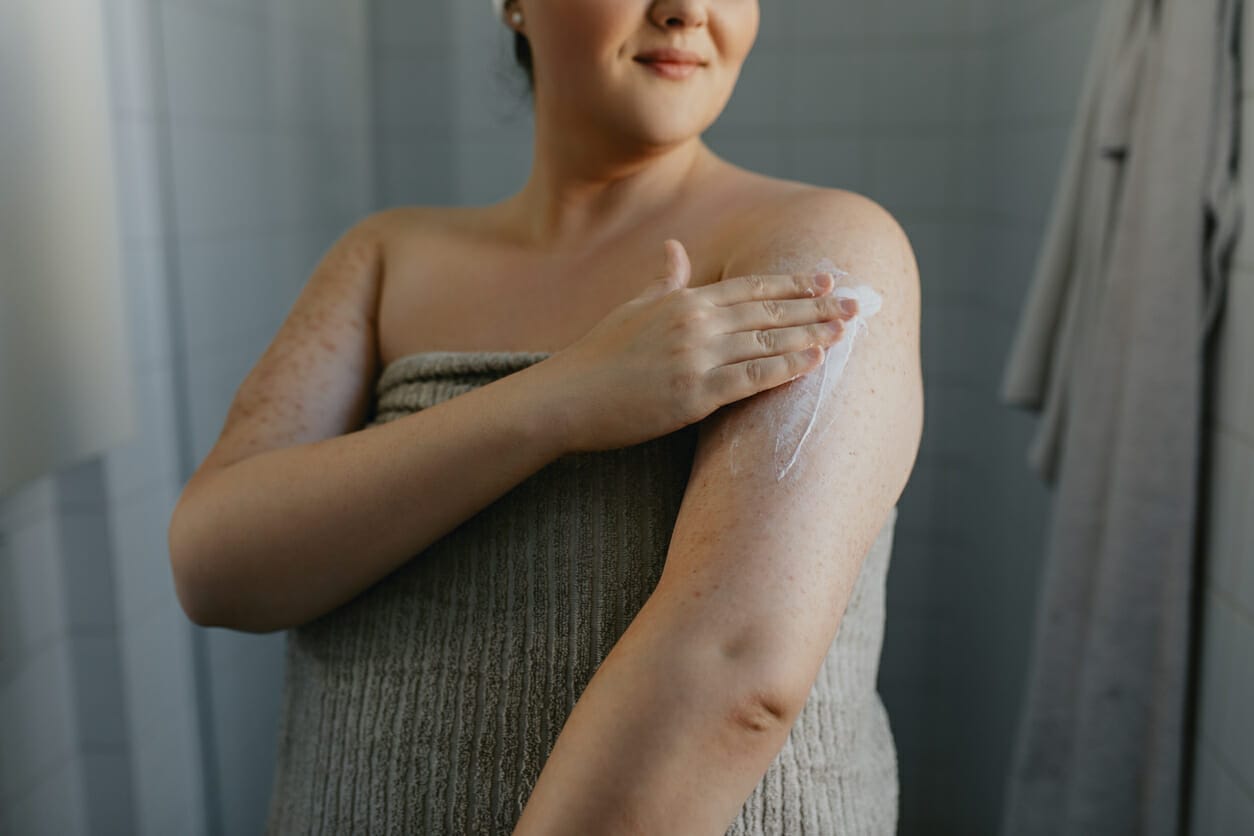
  • Improvement in the appearance of those little red bumps you may get on the back of their arms or thighs, known in the derm world as keratosis pilaris

  • Unclogging of pores and smoothing out the skin’s surface, giving a glowing appearance

4) REDUCTION IN ACNE
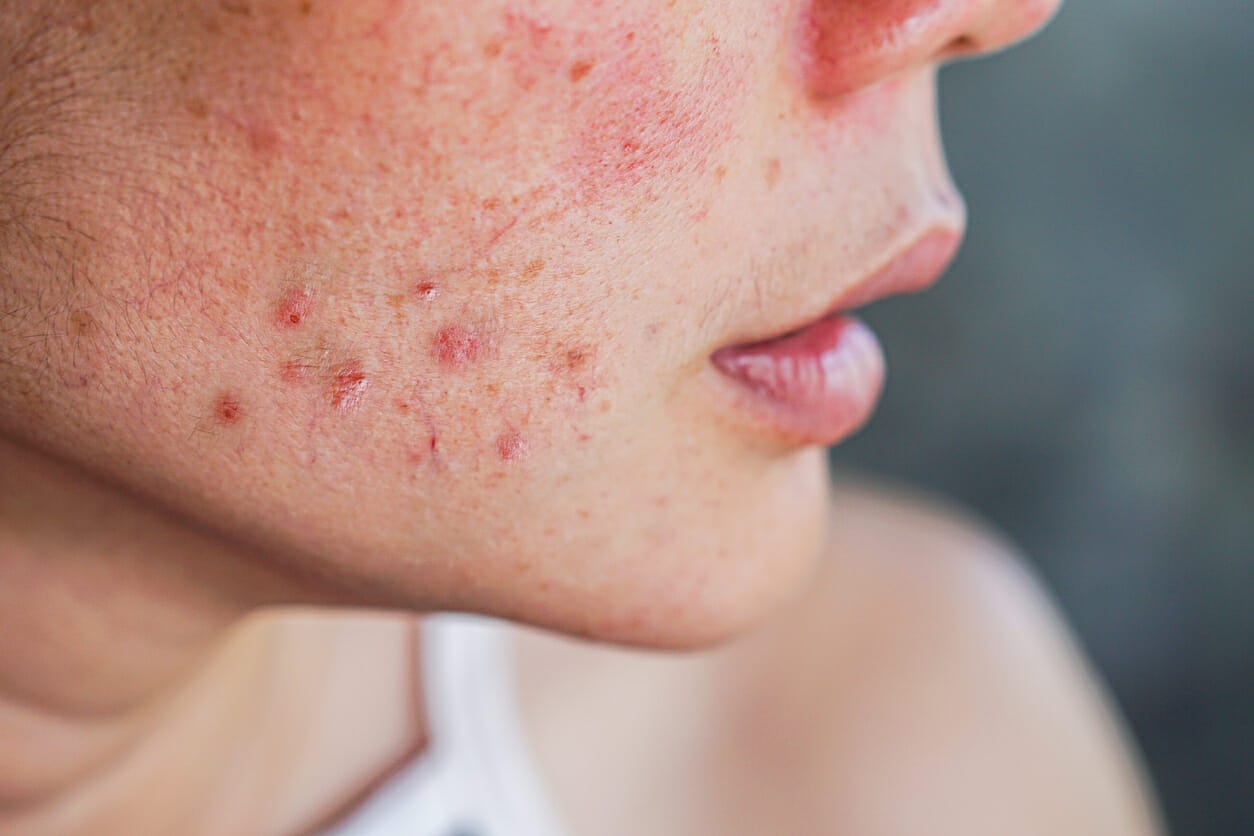
Fish oil can help with acne

Acne is an inflammatory condition. Even if you have acne that doesn’t look inflamed (think clogged pores and blackheads), research has shown that it has markers for inflammation.

Omega-3 oils work as a serious anti-inflammatory and also help to regulate the production of oil in your skin.

BENEFITS:

  • Both of these factors help in reducing those frustrating acne breakouts!

5) PROTECTION AGAINST ENVIRONMENTAL AND SUN DAMAGE
fish oil can help reduce acne

Eat your protection. EPA is both an antioxidant and anti-inflammatory, working to repair cells that have been damaged by environmental toxins and protect your skin against UV damage. EPA has been found in studies to block the release of the UV-induced enzymes that eat away at your collagen. Yes, there are bad enzyme reactions that can destroy your healthy collagen!

BENEFITS:

  • Reduction of UV damage to skin.

  • Protection against aging from sun damage.

    But don’t forget your sunscreen!

6) SLOW DOWN THE AGING PROCESS

fish oil can help slow down the aging process

OMEGA-3 OILS ARE POWERFUL ANTIOXIDANTS!

This combined with their anti-inflammatory properties make these essential fatty acid superheros that boost your skin’s collagen production.

BENEFITS:

  • Increased production of healthy collagen

  • Strengthening structure and firmness of your skin, preventing lines and sagging

Is There a Correct Order to Apply Your Skincare Products?

Is There a Correct Order to Apply Your Skincare Products?

Is There a Correct Order to Apply Your Skincare Products?

THE ANSWER IS YES!

Don’t you just love the right product that makes your skin feel soft and smooth? Or even better, one that is full of antioxidants or a sheer zinc-based product that protects you from the harmful rays of the sun? But if your routine has two or three or five products it can be tough to decide which goes on first (or second or third)!

WHY DOES THE ORDER YOU APPLY PRODUCTS MATTER?

You want to be sure your products to penetrate into your skin and do what they are meant to do. This can be a problem if you're putting thin, fluid or water-based products on top of thick, creamy or oily ones. The richer products will form a barrier on your skin that will prevent the other products from getting through.

This in turn can make your products less effective.  If certain products aren't able to absorb into your skin properly, you're likely not getting their full benefits.

Skincare Products?

HERE ARE THE BASICS...

Water-based before oil-based products:

Start with your water-based products, such as toners and serums. Heavier, more moisturizing creams and oils come next, followed by sunscreen.

This makes sense because as we all know, oil and water don't mix.  Oil acts as a barrier and will block a water-based product from penetrating into your skin.

Thinnest to thickest texture:

Apply lighter products before heavy ones.

If you have a couple of water-based products or serums they can be layered on top of each other, and there shouldn't be an issue with the penetration of one versus the other.  When applying your moisturizing oil-based products begin with lighter lotions, then thicker moisturizers followed by oils.

In other words, apply those water-based products in any sequence you like, then oil-based products afterward.  Think of oil-based products as the icing on the cake!


WHAT IF YOU USE A TOPICAL PRESCRIPTION MEDICATION?

Once you throw prescription medications into the mix, application order becomes more important. Topical prescriptions such as retinoids, steroids, and antibiotics beat out cosmetic products every time, and you need to ensure you’re getting the full dosage of your topical medication. Any topical medication that has been prescribed for you should go on first after you cleanse (and tone - if you use a toner) because medicines are absorbed best when the skin is damp, and when there’s nothing between the skin and the medicine.

Applying a serum or moisturizer before a topical prescription medication basically dilutes your medication. That said, if you’re using something that’s known to be irritating (such as a retinoid, like retinol or Retin-A/tretinoin), and you have sensitive skin, I recommend mixing it with your moisturizer or putting it on after moisturizer to soften the blow a little.

An important side note that also pertains to prescription retinoids, is that some over-the-counter active ingredients can interfere with the effectiveness of retinoids when used during the same routine. In particular, benzoyl peroxide can deactivate certain retinoids when used at the same time.  If you use any benzoyl peroxide product and a retinoid, apply one in the morning and one at night.


WHAT ABOUT SUNSCREEN?

Most medical experts and scientists agree that sunscreen is always the final step in your daytime skincare routine. This is exactly how sunscreens are tested to earn their SPF rating: Nothing goes over them. Any skin care product you apply over a sunscreen dilutes and reduces its effectiveness.

Sunscreens are divided into two camps, physical and chemical. They work in two different ways, like a sponge or like a shield.

  • Physical sunscreens contain minerals (like zinc oxide and titanium dioxide) that create a barrier on your skin to block out harmful rays.

  • Chemical sunscreens (look for ingredients like oxybenzone, avobenzone, octisalate, octocrylene, homosalate, or octinoxate) absorb the sun's rays.

When you mix your SPF with another medium like moisturizer, you run the risk of diluting your sunscreen’s effectiveness or canceling it out altogether.

I know I said oils go on last, but technically, sunscreen is the absolute last step. Your other products are working to penetrate and treat your skin, but sunscreen does not need to penetrate into your skin.  It’s there to protect your face and act as armor against the outside world.

Just make sure you are using an SPF of 30 or higher!


CAN MAKEUP GO OVER YOUR SUNSCREEN?

It is true that a foundation or tinted moisturizer will hide imperfections or discolorations on your skin best if it is the last thing you apply.  I’m often asked if applying foundation that doesn’t contain sunscreen over the sunscreen you’ve just applied will diminish the sunscreen’s ability to protect skin. It won’t if you follow these guidelines:

  • Wait 3–5 minutes for the sunscreen to set before applying foundation.
  • Apply the foundation in smooth, downward motions (no rubbing back and forth). You can also use a sponge or brush to gently press the foundation on.
  • Do not use excess pressure or over-blend.

DO YOU WANT TO AVOID MAKEUP ALTOGETHER? THEN USE A TINTED SUNSCREEN OR A CC CREAM WITH SPF TO DO BOTH JOBS AT ONCE!

Here are some of my favorites:

HERE IS THE RUN-DOWN STEP-BY-STEP:

(AND IT DOESN’T MEAN THAT YOU NECESSARILY NEED ALL OF THESE STEPS)

Step 1: Cleanse and/or exfoliate. You can learn more about exfoliating here.

Step 2: Use a toner, spray or essence

Step 3: Apply eye cream

Step 4: Use any topical prescriptions or spot treatments

Step 5: Apply antioxidant serum or retinol/Retin-A/tretinoin (night only)

Step 6: Apply moisturizer (thinnest to thickest)

Step 7: Apply face oil

Step 8: If in morning - apply your SPF/sun protection. Learn more about sun protection here.

Step 9: If wearing - gently apply makeup as to not disturb SPF


MORNING VS NIGHT?

Best to focus on products that "protect" your skin—SPF, primers, BB and CC creams—for the morning time, and "correct" your skin in the night, such as heavier moisturizers and retinol products. The “correcting” or treatment products will stay on your skin longest with nighttime application. And your skin needs the protective products during the day to help fight against damaging sun rays and pollutants.

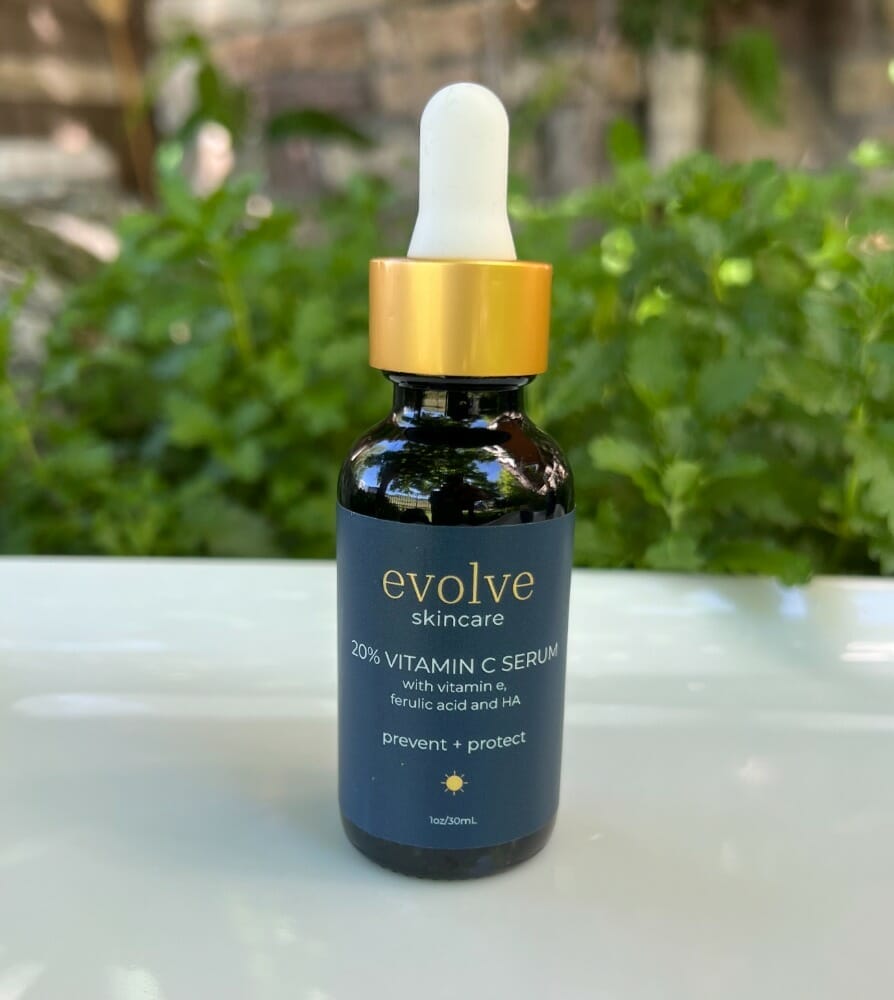
BTW - antioxidant serums both protect and correct, so they can be used morning or night! I use a vitamin C serum (Evolve 20% Vitamin C Serum) in the morning and Evolve HA serum twice a day.

Evolve Vitamin C Serum

Evolve 20% Vitamin C Serum

(with ferulic acid, vitamin e, and botanical HA)

Evolve HA Serum

Evolve Advanced HA Serum

(with antioxidants and organic green tea extract)

Learn more from Dermatologist Pauli Morrow from Evolution Dermatology

Pauli Morrow, MMSc, PA-C

The bottom line…

Using skin care products should be gratifying and make you feel good about your skin! Don’t stress about it too much, sticking to a precise application order ultimately won’t make or break your skin-care routine.

If you are using a prescription product, always check with your derm provider before introducing a new product to make sure it’s compatible with your topical meds. You want to ensure that your prescription will most effectively treat what it is intended to!

If your routine is just for fun or self-care, just do your best and don’t agonize over the details too much!